From Table Service to Keepsake: Silver Through Changing Customs
Silver through changing customs: see how tableware’s use, storage, and family stories can reveal its changing role without overstating what the evidence proves.
The common mistake with old silver is to treat every piece as either a formal heirloom or an obsolete utensil. Silver tableware through changing customs is easier to read when you begin with the object’s form and the evidence that remains, rather than assigning it a grand household story. A serving spoon may have moved from regular use to occasional use, then into a box kept by one person.
Routine tableware
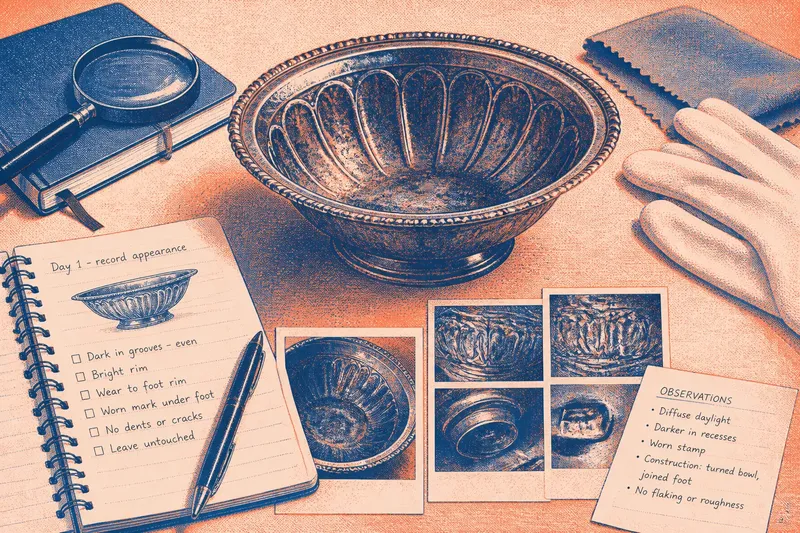
Spoons, forks, cups, and serving pieces were made for particular tasks. Their presence in a household does not, by itself, tell us how often they were used or how formal a meal was. A softened spoon bowl or small marks near a fork’s tines can suggest handling, but neither identifies a household, meal, or date.
Compare related objects before deciding whether a piece belonged to a working group. Matching place settings may indicate that someone assembled or kept them together; a lone serving fork could have arrived separately or survived after other pieces were dispersed. The comparison describes the surviving group, not necessarily its original history.
Start with the object’s form, then ask what the wear can and cannot support.
Serving and ceremony
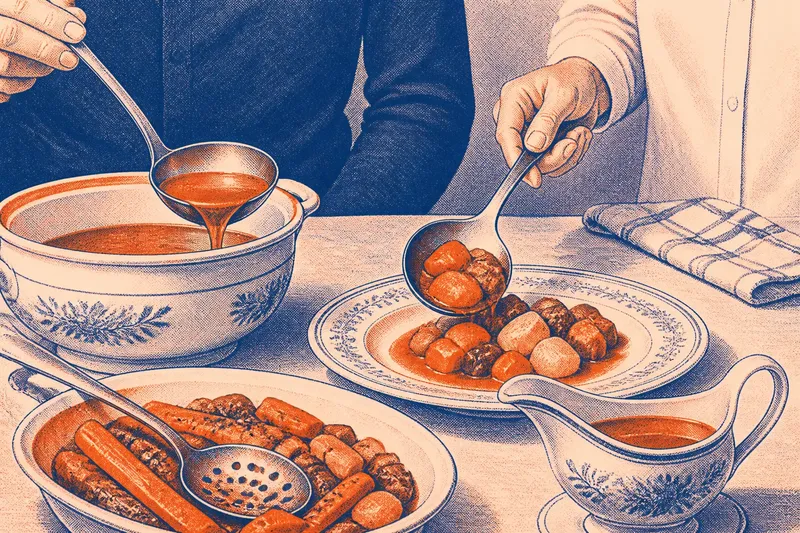
A large serving spoon, ladle, or covered dish could be functional and visually prominent at the same time. Its size and design may support an interpretation as a serving object, but they do not establish that it appeared only at formal meals. Without a dated record or a reliable account, broad claims about how dining customs changed in a particular place or period should remain open questions.
Imagine a family has a silver gravy ladle and a note saying it came from an aunt’s dining room. The note gives a family connection, while the ladle’s shape supports its likely serving function. If the note says nothing about Sunday dinners or guests, those details should not be added to its history.
Describe the likely task separately from any claim about the occasion.
Storage and display
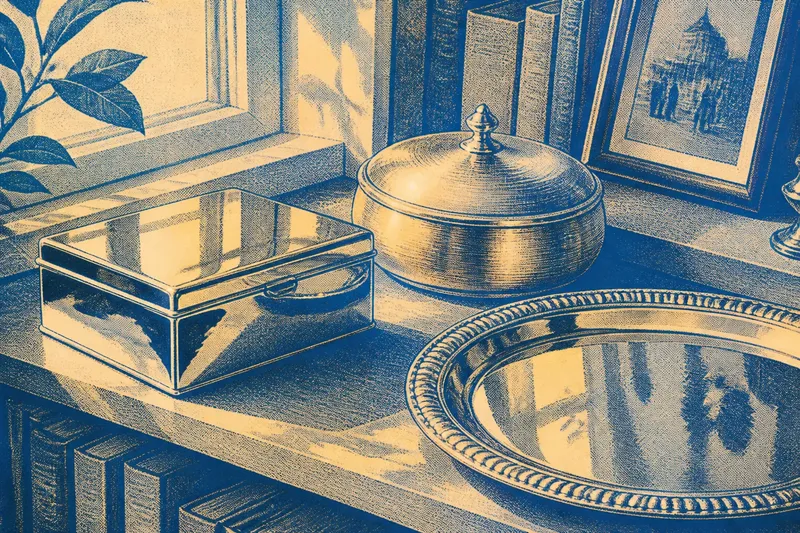
A fitted case, cabinet, or drawer can show how an object was kept when it entered the surviving collection. It cannot prove that the piece was never used. A teapot displayed on a sideboard may also have returned to the table; a boxed set may have been stored between uses or kept largely for display.
Record the storage context as an observation. “Found in a fitted case” is more precise than “reserved for important guests,” unless a dependable source supports the latter.
Objects as keepsakes
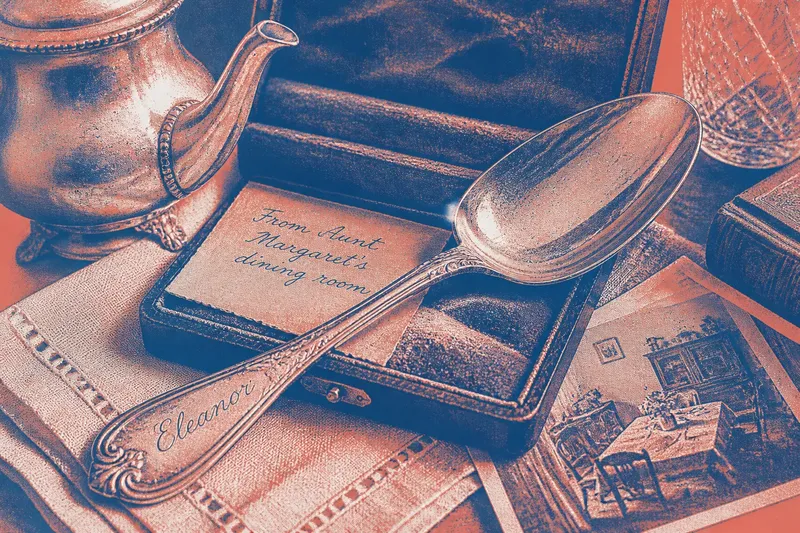
A piece may outlast the service it once accompanied. A name engraved on a teaspoon connects it to that name, but does not establish who used it or on what occasion. A family account can add context, though its source and degree of certainty matter.
Keep known details distinct from interpretation. Note an inscription exactly, identify who supplied a family story, and mark uncertain details as uncertain. This preserves what is known without asking affection to do the work of documentation.
Reading silver evidence
Use a short evidence check before describing a piece. Each observation should lead to a cautious decision, with an alternative when the evidence is inconclusive.
- Form: Check whether the shape supports a likely function, such as serving or drinking; if it does, describe that function as likely, then avoid claiming a specific meal, or if it does not, describe the form without assigning a task.
- Wear: Check for softened edges or handling marks; if they are present, record them as signs of handling, then leave frequency and ownership open, or if they are absent, do not infer that the piece was unused.
- Related pieces: Check for matching or complementary objects; if they appear to form a group, describe the surviving group, then avoid assuming it is complete, or if none remain, describe the object as a surviving single piece.
- Storage: Check whether the object is in a case, cabinet, or drawer; if the context is clear, record where it was kept, then avoid treating storage as proof of display-only use, or if its earlier storage is unknown, mark that history as unknown.
- Inscription: Check the wording and location of any engraving; if it names a person or occasion, transcribe it accurately, then distinguish the inscription from claims about use, or if the wording is unclear, record the uncertainty rather than guessing.
- Family account: Check who supplied the story and what they know directly; if the source is identifiable, preserve the account with that attribution, then label unverified details, or if the source is unknown, retain the story as unverified family memory.
Say you inherit a silver serving spoon with no matching pieces. Its handle bears the name “Eleanor,” and a family note says it came from an aunt’s dining room but gives no date or meal. First, record the spoon’s form as consistent with serving; second, transcribe the engraving as “Eleanor”; third, preserve the note and identify it as the source for the family connection; fourth, state that the occasion and pattern of use are unknown. The resulting description is “Silver serving spoon, engraved ‘Eleanor’; family note says it came from an aunt’s dining room; date and use unknown.” That is less dramatic than a wedding story, and more useful.
Questions about silver customs?
Was silver only used for formal meals?
No single answer fits every piece or household. Form can suggest a task, but the object alone may not reveal whether it was used routinely or saved for particular occasions.
Can wear reveal how often a piece was used?
Wear can indicate handling, but it rarely establishes frequency or ownership by itself. Describe the visible marks and leave those further claims open unless another reliable source supports them.
Does an inscription prove a family story?
An inscription can connect an object to a name or wording, but it does not establish the full story attached to it. Preserve the inscription exactly and identify the source of any additional account.
How should a silver keepsake be described?
Separate direct observations from remembered history. “Engraved with a name” is an observation; a claim about a particular event needs a source that supports it.
Silver through changing customs is best understood by tracing what the object itself supports: likely function, visible wear, storage context, inscriptions, and attributed memories. When one of those links is missing, leaving it open is not a failure of interpretation; it is the most accurate part of the record.